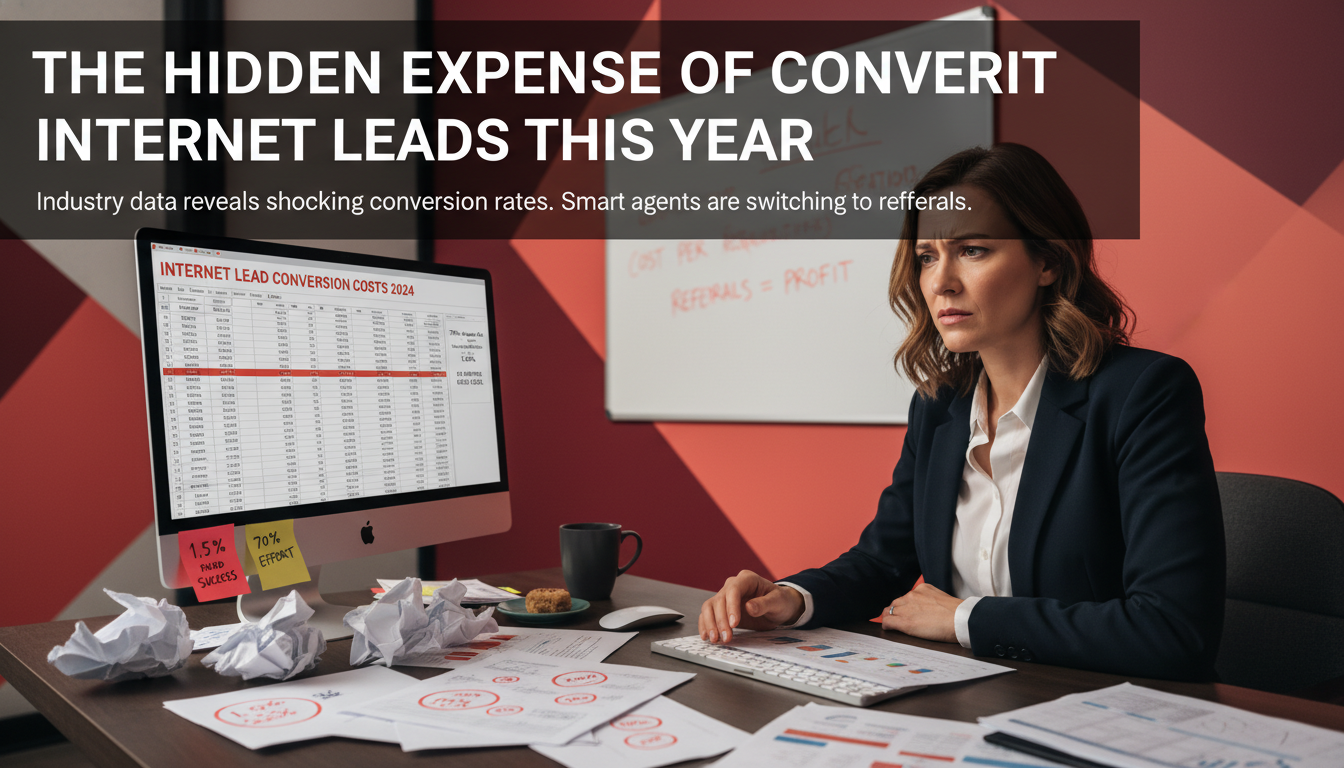
The Hidden Expense of Converting Internet Leads This Year

James
Author
Last month, I watched an agent in my market celebrate closing her first internet lead after 14 months of follow-up. Fourteen months. When I asked her ...
Last month, I watched an agent in my market celebrate closing her first internet lead after 14 months of follow-up. Fourteen months. When I asked her to calculate what she actually invested in time and money to convert that single lead, her excitement quickly turned to concern.
The reality is that internet leads have become one of the most expensive ways to grow a real estate business, but most agents don't realize it until they do the math. Let me break down what converting internet leads actually costs in 2024.
The Brutal Numbers Behind Internet Lead Conversion
Recent industry research paints a sobering picture of internet lead performance. More than 70% of real estate leads require at least five contact attempts before they even respond to you. That's five calls, emails, or texts just to get a "hello" back.
But here's where it gets worse: barely 1.5% of internet leads actually result in a closing. Think about that for a second. If you purchase 100 internet leads, statistically only one or two will ever sign a contract with you.
The typical conversion window spans 6 to 18 months, which means you're nurturing leads for over a year before seeing any return on investment. During that time, you're paying for CRM systems, marketing automation, phone bills, and countless hours of your time.
The Real Cost of Follow-Up
Most lead generation companies conveniently forget to mention what happens after you receive that shiny new lead. The follow-up process is where the real expense lies.
To effectively work internet leads, you need a multi-channel approach. Phone calls are essential because many leads won't respond to emails alone. Text messaging has become crucial since younger buyers prefer texting over talking. Email nurturing sequences help you stay top-of-mind during that lengthy conversion window.
Here's what a proper follow-up cadence looks like:
- Initial contact within 5 minutes of lead receipt
- Follow-up call within 2 hours if no response
- Text message the same day
- Email sequence beginning immediately
- Weekly contact attempts for the first month
- Bi-weekly contact for months 2-6
- Monthly touchpoints for months 6-18
That's potentially 50+ contact attempts per lead over 18 months. Even at a conservative estimate of 10 minutes per attempt, you're looking at over 8 hours of work per lead. When you factor in your hourly worth, the cost per conversion becomes staggering.
Why Most Agents Give Up Too Soon
The statistics tell us that 80% of sales happen between the 5th and 12th contact, yet most agents give up after just 2-3 attempts. This creates a frustrating cycle where agents spend money on leads, don't see immediate results, give up quickly, then buy more leads thinking the problem was lead quality.
The agents who do stick with proper follow-up often find themselves overwhelmed. Managing hundreds of leads in various stages of the nurturing process requires sophisticated systems and significant time investment. Many agents end up hiring inside sales assistants or virtual assistants just to handle the follow-up volume.
The Technology Tax
Converting internet leads effectively requires a tech stack that can easily cost $500-1000 per month. You need a CRM system, email marketing platform, text messaging service, lead routing software, and often a predictive dialer for efficient calling.
Then there's the learning curve. Each platform has its own interface, features, and best practices. Agents spend hours watching tutorials, attending webinars, and trying to optimize their systems instead of actually selling real estate.
The Opportunity Cost Nobody Talks About
While you're spending 40+ hours per week chasing internet leads, what opportunities are you missing? Every hour spent calling unresponsive leads is an hour not spent at networking events, not building relationships with past clients, not developing referral partnerships.
The most successful agents I know spend their time on high-value activities that compound over time. Referral relationships, community involvement, and past client nurturing create sustainable business growth that doesn't require constant lead purchases.
Why Referral Leads Are Different
Referred buyers and sellers show up with something internet leads lack: existing trust. When someone refers a friend or family member to you, they're essentially vouching for your expertise and character.
This trust translates into dramatically different conversion metrics. Referral leads respond faster, ask fewer skeptical questions, and move through the buying or selling process more efficiently. Instead of 18 months of nurturing, many referral leads are ready to take action within weeks.
The follow-up requirements are completely different too. Instead of cold calling someone who downloaded a home valuation report, you're calling someone who's expecting your call because their trusted friend recommended you.
The Math That Changes Everything
Let's run some numbers. If internet leads convert at 1.5% and cost $50 each (including all the hidden expenses), you're paying roughly $3,333 per closed transaction just for the lead cost. Add in the 8+ hours of follow-up work, technology costs, and opportunity cost, and your real investment per conversion is much higher.
Compare that to referral leads, which typically convert at 20-30% rates and require minimal follow-up investment. The math speaks for itself.
Building a Referral-Based Business
The smartest agents in today's market are shifting their focus from chasing internet leads to building referral relationships. This means staying connected with past clients, developing partnerships with other professionals, and creating systems that consistently generate warm introductions.
It takes longer to build a referral-based business initially, but the long-term sustainability and profitability are incomparable. Instead of constantly buying leads, you're building an asset that generates business month after month.
If you're tired of the internet lead hamster wheel and ready to build a more sustainable business model, it's time to explore consistent referral opportunities. The agents who make this shift early are positioning themselves for long-term success while their competitors continue burning through marketing budgets chasing cold leads.